
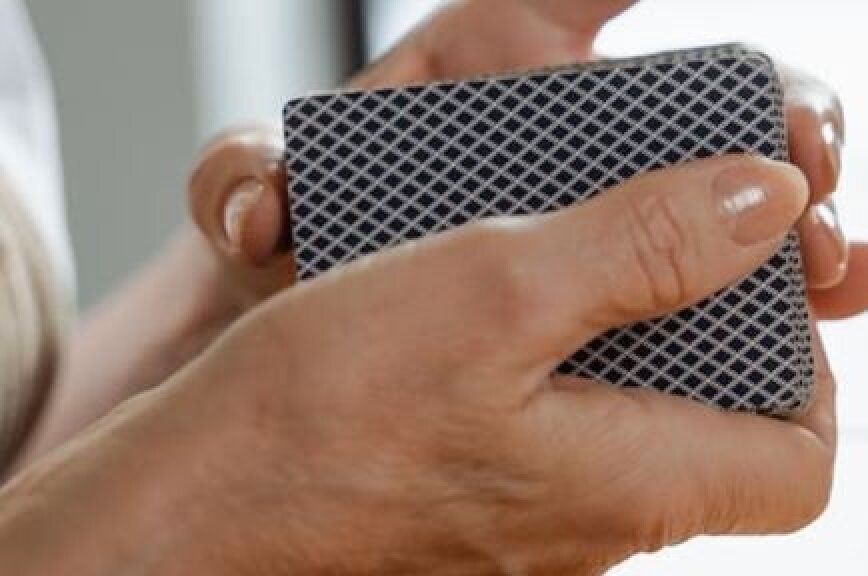
Unless you’re one of those rare individuals who enjoys all card games equally, there’s a chance you have a preference between blackjack and poker. Maybe you already know which is your absolute favorite and which you’d defend to the death. But for those who are still on the fence, or for those who are interested in the purely intellectual question, which of these two games can really claim to be the thinking man’s option? Which stands at the pinnacle of the “challenge” mountain and pushes its players the furthest?
Both Games Involve Complexity
First, let’s acknowledge the simple truth. Both of these games are complicated. Both are seriously challenging options that require you to spend significant time learning the nuances and patterns if you want to do well at them. Where many casino games are simple and rely heavily on luck, both of these games require you to actually engage your brain and think hard about the cards in front of you.
That’s an important distinction, and it’s one of the things that has helped the two titles stand out in a sea of other choices. While people might turn to slots for simple, quick thrills, we all recognize that if you want a skill-based option that will challenge you, you’re generally looking toward the card table, and whether you choose to go up against a cohort of other poker enthusiasts, or put your mettle to the test against a blackjack dealer, these are the major areas that offer a challenge for your brain.
So, now we’ve acknowledged that both are brain-testers, let’s start unpicking each by turn.
Blackjack Requires More Memorization
Blackjack first. This game stands out mostly because of the way it requires you to memorize a fair chunk of information – not absolute reams of it, but more than many people realize. Blackjack is a fast-paced game, and that means you’ve got to be able to look at your cards and the dealer’s cards, then make an almost immediate decision based on what you see.
How do players react this fast? By memorizing combinations and recognizing what the right move is, not working it out in the moment every time. If you want to play blackjack for real money, you’ll usually spend time in advance learning the different combinations that are likely to come up, and the correct move in given situations.
For instance, say you’ve drawn a five and a seven, and the dealer has a two and a three. Do you hit because your hand is low? Stand because the dealer’s hand is also low? A blackjack pro doesn’t stop to count up to 21 and think through their options and possible hand combinations. They simply react to the numbers on the table. That’s true even in tricky situations, like with the soft 18, a combination that many players find challenging.
So, blackjack requires a good memory and some pretty major work on pattern recognition. Although it’s possible to master the basic strategy fast, learning all the possible combinations and figuring out optimal moves can take years. Thinking man’s game? We’d say so!
Poker Requires People-Reading And More Discipline
Over to poker, then. The place where poker probably has an edge over blackjack in terms of its mental requirements lies in the other players and your ability to read humans. This goes both ways; you’ve got to be able to figure out what they’re thinking, and at the same time, notice and conceal your own tells to minimize their ability to turn this on you.
When you’re at the poker table, the most important information often comes from the other players. A twitching hand, a hesitation before raising, a sudden quietness after cards are dealt. All of these offer goldmines of information, letting you glean insights into what’s going on around you... but it doesn’t stop there. You've also got to weigh this information up against other factors, like the cards in play, how well you know your opponents, and the potential for bluffing. There’s a huge amount going on here.
And it goes even deeper, of course, when you start thinking in terms of your own tells. Even master poker players often spend years trying to eliminate their tells – and yes, that’s true in the online space too. Pauses, excessive betting, sudden cagey behavior: all of these things can give a sharp-eyed opponent information, even if your actual body language isn’t visible on the screen.
What’s more, these tells are constantly changing as your opponents change. A reliable tell in one person might be totally meaningless with another. Similarly, their ability to read your tells will vary, meaning you’ve constantly got to be vigilant about your behavior and when you might be unintentionally giving something away through an action you’ve never even thought about before.
This perhaps means poker wins the debate about which game is more brain-taxing, not because it wins at its core, but because the constant shifts make it hard to ever truly master poker. Blackjack can, eventually, be learned to perfection... but with poker, the parameters are always changing.
Overall, though, we’d say that both games should take home the medal for requiring you to use your brain and think critically about the cards and the dynamics of the game flow. Both present you with serious challenges, many varied situations, and the need to think about card probability, current hands, and money management.






0 comments