
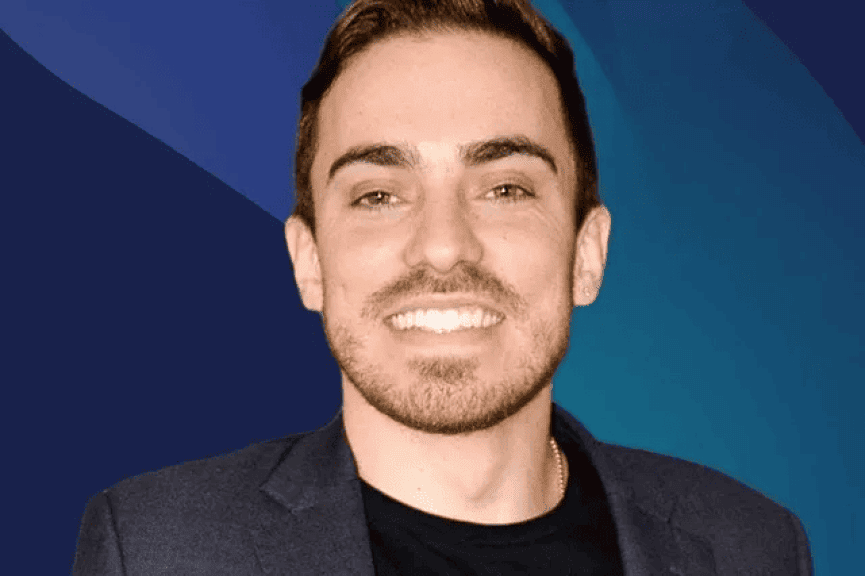
The José “Girah” Macedo scandal erupted in August 2011 and became one of the most infamous cheating cases in online poker history. It attracted considerable attention because the Portuguese player had emerged as one of online poker’s brightest young talents, and two poker stars, Haseeb Qureshi and Daniel “jungleman12” Cates, were also implicated in the controversy.
Fifteen years later, all three have built successful careers, although only one of them still plays poker professionally.
Building the Portuguese Poker Prodigy
Macedo rose to prominence on the Two Plus Two forums in 2011 at the age of just 18. According to his introductory post, he had turned a starting bankroll of just a few dollars into nearly $2 million in profits, achieving extraordinary win rates at the cash game tables.
His credibility was backed by two respected high-stakes players:
- Daniel “jungleman12” Cates
- Haseeb “DogIsHead” Qureshi
Both players mentored and staked Macedo. Qureshi also helped prepare the Portuguese player for his media appearances.
Macedo soon secured a sponsorship deal with Lock Poker and became a coach at PokerStrategy.
How Did Macedo Cheat?
Macedo was a member of a private Skype strategy group consisting of high-stakes heads-up players. He told the group that an extremely weak and aggressive player was playing on the iPoker network under the screen name sauron1989.
The cheating scheme worked as follows:
- Macedo persuaded fellow players to sit down against the alleged fish.
- He asked them to share their screens with him for coaching purposes.
- This allowed him to see their hole cards, and the information was used against them.
- Sauron1989 consequently played with an enormous informational advantage.
According to Macedo’s subsequent public confession, the sauron1989 account was operated by an unnamed friend whom he had previously introduced to poker. Macedo claimed that his friend had lost substantial sums of money, prompting the two to devise the cheating scheme together.
However, this was Macedo’s own version of events rather than an independently verified fact. The evidence that emerged raised suspicions that Macedo himself may have been playing on the sauron1989 account.
One particularly suspicious detail was that Macedo’s Skype connection and the sauron1989 account’s connection to iPoker simultaneously dropped and reconnected three times within a 20-minute period.
According to Qureshi’s subsequent account, the story about a wealthy, losing friend was also a fabrication.
Among the victims were ImFromSweden, who lost more than $10,000 at NL2000, and MossBoss, who lost over $20,000 at NL5000.
How Was Macedo Caught?
The players noticed that the supposed fish was playing against them with almost supernatural accuracy. Macedo’s behavior also raised suspicions, as he repeatedly encouraged his fellow players to play against sauron1989, insisting that the player was a massive fish.
The players involved began analyzing hand histories and Skype conversations, monitoring Macedo’s behavior before eventually confronting him with the evidence.
On August 7, 2011, Macedo publicly admitted to cheating. In addition to reimbursing the victims for their losses of more than $30,000, he promised to pay a further $30,000 in compensation.
Lock Poker terminated his sponsorship agreement, while PokerStrategy parted ways with him.
The Roles of Jungleman and Haseeb Qureshi
The cheating scheme was a major scandal in its own right, but the controversy gained even more attention when it became clear that the young player’s misconduct was not an isolated incident. Subsequent investigations and partly contradictory statements uncovered instances of multi-accounting, account sharing, and ghosting.
Haseeb Qureshi initially claimed that he had played on Macedo’s account during Lock Poker’s BLUFF Pro Challenge promotion, which had resulted in the Portuguese player’s disqualification. He also attempted to delay the public disclosure of the scandal. It later emerged, however, that his claim about playing on the account was an attempt to protect his friend Jungleman.
According to reports published at the time, the following events took place:
- In April 2011, Cates was unable to play on his usual poker sites following Black Friday. Macedo offered him access to his Girah account.
- Cates initially directed Macedo’s play via TeamViewer before receiving his password and playing PLO and NLHE from his own computer.
- Lock Poker detected a login from a different IP address and disqualified Macedo from the BLUFF Pro Challenge promotion.
- Qureshi took responsibility for playing on the account, and Cates initially corroborated his story.
- In his second interview with Subject: Poker, published on August 15, 2011, Cates finally admitted that he had played on Macedo’s account.
Qureshi also admitted to other violations. He deliberately transferred $100,000 to Macedo’s Lock Poker account through chip dumping and allowed Macedo to use his own iPoker account, Toshisan.
Importantly, however, neither Qureshi nor Cates was proven to have been directly involved in cheating the members of the Skype strategy group.
Was the Portuguese Player Ever Really a Prodigy?
This was one of the most intriguing questions raised by the scandal.
Speculation emerged within the poker community that Macedo was partly or entirely a manufactured poker personality whose results had been achieved or facilitated by other high-stakes players.
It was also difficult to understand why an exceptionally talented player with nearly $2 million in purported profits would risk his entire career for a few tens of thousands of dollars.
The origins of Macedo’s reported $2 million in profits and his actual poker abilities were called into question. However, it was never conclusively established that his entire career had been fraudulent or built on allowing other players to use his accounts.
What Happened to José Macedo?
Macedo virtually disappeared from the international poker scene following the scandal. However, he subsequently built a successful career in the business world.
Between 2013 and 2017, he studied philosophy, politics, and economics at Lancaster University in the United Kingdom while founding several businesses. He later turned his attention to cryptocurrencies and blockchain technology.
In 2019, he became a partner at Delphi Digital, and in 2021, he helped establish Delphi Labs.
Macedo is now the co-founder and CEO of Delphi Labs and a founding partner of Delphi Ventures. His work focuses on decentralized finance, technological development, and venture capital investments, and he regularly appears at industry conferences and on financial podcasts.
One curious aspect of the story is that Macedo’s poker background continues to feature as a positive credential in some of his professional biographies. According to his profile on Finnotes, he started playing poker at the age of 16 with $30 and had built a $1.6 million bankroll by the age of 18, achieving one of the highest win rates in six-max cash games.
The biography also mentions his contracts with PokerStrategy and Lock Poker but makes no reference to the scandal. According to the profile, Macedo quit poker to focus on his university studies.
Haseeb Qureshi Also Found His Way into the Crypto Industry
Following the scandal, Qureshi lost his coaching position at CardRunners and announced his retirement from professional poker.
He learned to code and worked as a software engineer at Airbnb before turning to cryptocurrency investments. He became a partner at MetaStable Capital and joined Dragonfly in 2019.
Qureshi is currently a managing partner at Dragonfly. The firm is one of the leading venture capital investors in the cryptocurrency industry, and in February 2026, it announced the launch of its fourth investment fund, worth $650 million.
The former professional poker player is also a co-host of The Chopping Block, a podcast covering the cryptocurrency market.
The two central figures in the Girah scandal who retired from poker ultimately went on to build international careers in the same industry.
Jungleman Remained Among Poker’s Elite
Daniel Cates suffered significant reputational damage, but the scandal did not derail his poker career. He continued to play at the highest stakes in the world and achieved considerable success in live tournament poker.
In both 2021 and 2022, he won the WSOP $50,000 Poker Players Championship, poker’s most prestigious mixed-game tournament. His back-to-back victories earned him more than $2.4 million in combined prize money.
By 2026, his career live tournament earnings had surpassed $19 million. However, his name would later surface in connection with another cheating controversy: in 2020, he became embroiled in a ghosting scandal involving a private online poker game.
Fifteen Years After the Scandal
In the long run, the events of 2011 did not prevent any of the three central figures in the Girah scandal from achieving professional success. Macedo and Qureshi became executives at prominent investment firms in the cryptocurrency industry, while Cates retained his place among the world’s poker elite.
The significance of the Girah scandal lay not primarily in the amount of money involved, which was relatively modest by the standards of the nosebleed stakes at the time, but in the fact that it called into question the trust underpinning elite online poker, the professional integrity of its players, and the legitimacy of their reported results.









0 comments